Monday, 28 March 2022

2022 Oscars Wrapped Up

The much maligned Academy Awards have been struggling for viewership for years. In the last five or six years the respect for the Oscars has rotted away: overly political messages from the wealthy elites, a focus on representation rather than quality, honouring films that the general public have not seen, cringe-inducing hosting and humour or audience Twitter competitions- take your pick which is the biggest factor. But if the Academy wanted to get people talking, all that was required was the Fresh Prince of Bel Air smacking The Rock... sorry, Chris Rock before a packed auditorium. The moment is one for the history books, especially considering Will Smith's Oscar win a few minutes later (his defence amounts to how he embodied what Richard Williams did in King Richard). 

Whilst a great moment of drama, it has already been discussed, memed and blasted enough. So let's focus on the winners. 

Best Picture: CODA

Was Sam Elliot's sandblasting of The Power of the Dog the coup de grasse for its Best Picture chances? Jane Campion's Western drama seemed the surefire win for much of the awards race, but some last minute pit-stops at the Producer's Guild of America boosted CODA's chances. It became the first film released on a streaming service (Apple) to win the top prize, and that's where the first issue comes. Nobody really has Apple TV+, nobody has really seen this film, and nobody had even heard of it beforehand. It's been logged on IMDb and Letterboxd dramatically fewer times than The Power of the Dog, Nightmare Alley, West Side Story and Dune. Giving a mediocre cinematic text like Spider-man: No Way Home a Best Picture nomination just because everyone went to see it should not be the case, as that film will get sequels and the cast will be rich. And whilst smaller made films rely on awards prestige to gain greater distribution, there should be a middle ground where popular films are awarded. The Last Duel may well have been a big box office bomb, but it only grossed $9 million less than King Richard and, because of availabilty on Disney+, has over double the number of logged views on IMDb / Letterboxd. In fact, it isn't too far behind West Side Story. Streaming views, limited box office runs and tickets sold should be taken more into account here, especially if the Oscars wants viewership to be back to its peak in the late 1990s and early 2000s. Ultimately, Best Picture winners are like X-Factor winners: the runner ups are usually better remembered (Mad Max: Fury Road > Spotlight, Whiplash > Birdman). Giving the Best Picture to The Power of the Dog would only make those that disliked it louder. 

The Technical Oscars: Dune Sweeps

Ten nominations, six wins. Dune repeated Fury Road's Oscar blitzkrieg by hoovering up Sound, Editing, Visual Effects, Cinematography, Production Design and Original Score (if Sound was still split with Mixing and Editing then it undoubtedly would have seven Oscars). This is entirely worthy: no other technical film was on the same level as Denis Villenueve's passion project. Hans Zimmer, the greatest composer of the 21st century, got his second (!) Oscar. His snubs for Interstellar, Dunkirk and Inception are still felt, however. Greig Fraser's win in Cinematography is perhaps the most joyous win: Fraser has emerged as one of the leading visonaries of the 2010s through films like Zero Dark Thirty, Rogue One, The Mandalorian and Dune, whilst his work on The Batman perhaps tipped him over the finish line as more and more people take notice of him. Dune's wins for Cinematography and Visual Effects matches Villeneuve's success with Blade Runner 2049 and emphasises how hand-in-hand these two categories have been in the 21st century: The Fellowship of the Ring, Hugo, Life of Pi, Avatar, 1917, Gravity and Inception. Dune deserved to win big- its $400 million box office gross is a remarkable feat, pandemic or no. In fact, the nine other Best Picture nominees have a total box office gross of $240.2 million, meaning an average of $26.7 million per film. Let that be a sign. 

Bond Song Hatrick

Billie Eilish won an Oscar for 'No Time to Die' in the Original Song category, following the success of Adele's 'Skyfall' (amazing!) and Sam Smith's 'The Writing's on the Wall' (terrible!) to show that Bond songs are either the easiest vote because of the credit song being inside the film (and not at the end like so many are) or because they are just always popular songs... Either way, it was great to see No Time to Die get a little gong to coincide with the franchise's 60th anniversary. Eilish's win has one explanation: 'We Don't Talk About Bruno' was egregiously not nominated. Encanto's nominated song, 'Dos Oroguitas' lacked the ubiquity to pursue the win, reflecting Disney's failings to predict which song would be the one everyone loved. 

Acting Awards are as Predictable as Ever 

Ariana DeBose, whose career is about to skyrocket, deservingly won Supporting Actress for her role as Anita in West Side Story. Her win is notable for trivia-heads: following Rita Moreno's win as the same character in 1961's West Side Story, there are now three characters who have had double Oscar wins (Heath Ledger and Joaquin Phoenix for Joker, Marlon Brando and Robert De Nero for Vito Corleone). Troy Kotsur lapped Kodi Smit-McPhee to become the first deaf actor to win an Oscar, to much praise. As for Best Actor and Actress it was a tiresome affair as Will Smith and Jessica Chastain won Oscars for, yes, biopic performances. Since the 2001 Oscars, 22 of the 44 lead actor wins have been for biopics / true stories. That number does not include performances like Olivia Colman in The Favourite (too expressionistic) or Leo DiCaprio in The Revenant (too little to actually base a performance off of). It is a remarkable figure, one that epitomises the Oscar-bait nature of the biopic. A great deal of respected actors have won Academy Awards for their biopic performance, even if public sentiment is that they have done many other much better performances (e.g. Gary Oldman in Darkest Hour). The Eyes of Tammy Faye was honoured with a Make-up and Hair Oscar but it has become tiresome to see actors win for what are essentially impersonations. Benedict Cumberbatch crafted a new, multi-layered character with Phil Burbank, but that no longer seems enough if you are up against an 'overdue' actor. It is a lot more refreshing when Emma Stone wins for Mia or Anthony Hopkins wins for... um... Anthony. 

The Oscars Fan Favourite 

We have seen what Boaty McBoatface can do to social media polls. Why the Oscars thought doing a Fan Favourite Twitter competition would be a great idea is beyond comprehension. The bizarre nominees for 'Oscars Cheer Moment' were the three Spider-men, the Avengers assemble sequence, Neo dodging bullets, Effie White singing in Dreamgirls (!) and the Flash speed force scene from Zack Snyder's Justice League (which didn't even go to cinema). The Flash won. How? Thousands of Twitter accounts and bots plugging the polls every day to honour Zack Snyder. You have to feel sorry for the guy- his films are worshipped by a totally monomaniacal fan base who are gagging for the restoration of the Snyderverse. There is no other conceivable way for that Flash scene to outmatch the two MCU entires. The Oscars Fan Favourite Film for 2021 was even stranger: Cinderella came second, beating tick tick... BOOM!, Johnny Depp's Minamata and No Way Home. The winner was Zack Snyder's Netflix disappointment Army of the Dead. Boaty McBoatface indeed. 


All told, as irrelevant and unecessary as ever. 

Sunday, 6 March 2022

Review: The Batman

Minor spoilers follow.

Like James Bond, Bruce Wayne has had his fair share of actors, with each one offering a different style and tone. It seems rather surprising then that since 2012, we have had three Batman actors. Christian Bale bailed out with The Dark Knight Rises, Ben Affleck took over in 2016 and now Robert Pattinson, teenage-vampire-hearthrob turned indie-darling, has embodied the Caped Crusader with The Batman, directed by Matt Reeves. Was it necessary to bring in a new Batman so soon after Batfleck? Whilst the character has been mercilessly exploited since 1989, this new incarnation is fully justified and worthy of the greats. 


Batman in comics and video games is acknowledged as the 'world's greatest detective' but, besides a few moments in The Dark Knight trilogy, there is very little evidence of this cinematically. Matt Reeves has plunged himself into the detective aspect, making his Batman an observational master of deduction within two scenes of meeting him. He makes the professional cops look like they flunked their forensic's exams. As a detective tale told over three hours, Reeves draws on David Fincher's crime dramas Se7en and Zodiac to establish his creative desires. The perpetual rain in Gotham echoes Se7en's neo-noir desires and the Riddler's (Paul Dano) puzzles and crime scenes are highly evocative of the Zodiac killer. It is an apt choice for inspiration. 

As Bruce Wayne (but mostly as Batman), Robert Pattinson is a triumph of casting. All the naysayers that only see him as Edward Cullen and have not seen Good Time, Tenet and The Lighthouse are wonderfully proven wrong in moments. There is no ridiculous Bat-voice and his physicality is lean and powerful rather than the battering ram approach of Ben Affleck. One sequence at a funeral sees Wayne silently observe a recently orphaned boy staring at his dad's grave. Pattinson's eyes tell it all: the pain, tragedy and the desire to stop this boy from following in his path of vengeance are beautifully portrayed. 

Orphans are pivotal to the film's narratives and themes. Wayne's relationship to Alfred (Andy Serkis) is fractured; we get the feeling that the butler thinks his employer is rather insane whilst Wayne is too emotionally splintered from his parents' death to connect to anyone else. The opening scene uses binocular vision to create a sense of dread and voyuerism. Later on, the same shot is used to watch someone else. The misdirection makes us assume its the original 'watcher' but instead it's another orphan character who took on the pains of his past with a completely different approach. In one of the most graceful moments in superhero history, the orphan boy from the funeral is rescued under the deep reds of a flare, an act of heroism that redeems our protagonist and solves his angsty mindset. 


The Film Twitter-friendly casting is largely spot on. Jeffrey Wright's Jim Gordon has a similar Felix Leiter feel- not quite as expert as the main character but his heart is in the right place. Zoe Kravitz's Selina Kyle (Catwoman) gets the lion's share of characterisation due to her complicated relationship with Gotham's top criminals whilst also proving an athletic fighter. The trifecta of villains steal the show though. Dano's Riddler is frightening from the get go. His performance is a fusion of Dano's characters from Prisoners and There Will Be Blood with the twisted logic of Heath Ledger's Joker. Then there is Colin Farrell, clad in effectively jarring facial make-up, as the Penguin. Like Joe Pesci in Casino, he is an ugly, violent right-hand man with an eye on being top dog (or bird). He isn't in it much, but he steals the Batlight when he does. The real surprise is John Turtorro as Carmine Falcone, the crime lord who has turned the police and politicians into poisoned pawns that step aside for him wherever he goes. He too belongs in a Scorsese film, what with all these mentions of rats too. 

The crooks of Gotham very rarely emerge in the daylight, but then neither does Batman. Greig Fraser, the talented cinematographer, rarely allows daylight into his frames. The film is dark and rain-lashed whilst the oranges are infernal. If Hell exists, then the fiery outlines of Gothic buildings and the sepulchral chaos on the dirty streets must be the closest depiction of it. In complete cohesion with Fraser's aesthetic is Michael Giacchino's muscular, sombre score. Unlike Hans Zimmer and Junkie XL's more action orientated beats for Batman, Giacchino goes for something more akin to the Imperial March, whilst also delivering some nice themes for Catwoman and the Riddler. Batman's first introduction, a real knock-out scene, sees the central theme build from the darkness as we hear footsteps approaching some ill-fated goons. It is one of Giaccino's best efforts in years, enough to make you wonder why he wasn't properly applied to Spider-man: No Way Home (or why Marvel films never let their scores breathe). It is the second time Giacchino and Fraser have worked together (Rogue One) and it would be great to see them work together again in the future. Matt Reeves' cast and crew is a dream, and everyone pitches in work that ranks among the best of their respective careers. 


For a three hour film, modern audiences will be amazed at how swiftly the film flies. It is paced well due to its bursts of action, variety of characters and intrigue in the mysteries and riddles. The fistfights are worthy of Zack Snyder's warehouse crash-course in beating up red shirts, with Batinson delivering awesome coup de grasses. One sequence, lit entirely by the muzzle flash of semi-automatic rifles, is exquisite. Batman is at his best when his actions aren't entirely caught; it is left to the audience's imagination. Furthermore, it feels like we actually are watching the chaotic movements of a bat, which move at such rapid rate its hard to keep track of their course. The film's undisputed best scene has to the Batmobile chase. This is a riot in sound design and rain drenched carnage. It is like Prisoners' race to the hospital but with a loud muscle car instead. The low angle, rear wheel mounted shots capture corners and drifts with eye-popping pleasure. And the alighnment of a breaking ramp for a big jump sequence is deeply, incredibly cathartic (as is the speeding up of frame rates before a collision). Not since Mad Max: Fury Road has a car chase been so crazy and visually breathtaking. 

Despite this high praise, The Batman is not faultless. The first half's world building is so immersive that once everything is established and the plot moves to focus on Bruce, interest Waynes a little. Furthermore, whilst not fully turning into a CG spectacle finale, there is a 'big' moment that was costly to film that seems a little out of touch with the rest of the film's close quarters engagement. It isn't too overwhelming, but the final set piece could have been a little smarter. Finally, there is an egregious moment of sequel-baiting in the epilogue sequence that induced yawns. It could have served as a credit scene or it could have been cut- perhaps Matt Reeves had total creative freedom as long as he included it? Either way, it killed off the satisfying closure. 

At its best, The Batman is a brilliant, vital new version of the character in his early years. The inner conflict and need for vengeance works so well for a new version of the character. Even the black eye mask that still adorns Bruce's face without the mask emphasises how little of the playboy is alive in him- he is pure shadow and nightmare. An audio-visual triumph with a predictable but nonetheless immersive detective story. 

Sunday, 27 February 2022

Hollywood and China - what is the future?

The film market is constantly changing due to factors like streaming services, coronavirus, studio competition and technology. Recently there has been one potentially seismic shift: the rejection of Hollywood properties by China. 

China emerged in the 2010s as one of the leading markets for internatinal film distribution, often 'saving' or massively boosting the profits of Hollywood blockbusters. Pacific Rim made $411 million worldwide in 2013 from a $190 million budget, an amount that meant it barely pushed through a profit. Of that total, a symmetrical $114 million came from China alone, its biggest market. This breakout success earned it a sequel. Similarly, in 2014 Transformers: Age of Extinction made a record-breaking $300 million in China, almost double the $167 million gross of 2011's Transformers: Dark of the Moon. This boost in China secured the film $1 billion worldwide, even while it grossed significantly less in other markets than Dark of the Moon

More recent examples include the success of the Fast and Furious films, Warcraft and Venom, which made an outstanding $262 million in China alone, contributing to a whopping $856 million worldwide. Superhero films and 'dumb' action films seem to be Hollywood's most successful film exports to the Middle Kingdom, with the MCU, whilst not relying on China for profit, often finding success there. DC's Aquaman surprised everyone with its mammoth performance in China as well. This therefore created a mutually beneficial relationshiop between Hollywood and China: films that underperform in the USA can make it back with overperformances in China, whilst already big blockbusters like Avengers: Endgame can challenge Avatar for the title of highest grossing film ever because of China's massive expanse of cinemas and audiences. 

This model has changed of late. The effect of the pandemic has challenged filmmaking in the West, with delays in production and scheduling creating a vacuum internationally, as countries like China and New Zealand managed to evade long lockdowns and kept cinemas open. Looking at the highest grossing films of 2020, half of the top ten are Chinese films (and one is Japanese). This emphasises how the domestic takings in China for their own films far surpassed those of Hollywood's and cemented in the Chinese film industry's mind that they did not need Hollywood to keep their cinemas open- they were making enough blockbusters already. In 2021, even with film business largely going back to normal in the second half of the year, three of the top ten were again Chinese films. Of note is The Battle of Lake Changjin  which earned over $900 million in its domestic market; the second biggest single gross for a country behind The Force Awakens' $937 million gross in the USA. Elsewhere on the list, the performances of F9 and Godzilla vs Kong were only so strong because of China's massive boosts (both much larger than their success in the US). 

In 2021, four Marvel films were released in varying situations: Black Widow had a simulataenous release with Disney+, Shang-chi and the Legend of the Ten Rings and Eternals were outright banned from China, and Spider-man: No Way Home emerged with the Omicron variant but still managed to gross about $600 million more than those three combined, even without China. Because of a Marvel film's standard $200 million budget, they often need to make over $600 million before they become profitable. Without China, Eternals and Shang-chi are technically flops, even if they did perform better than other pandemic films. On the other hand, the smaller budgeted Venom 2 also didn't get a Chinese release but still made a very respectable $502 million worldwide. This number is perhaps closer to what pundits expected the first Venom to make before it exploded in China, meaning that the sequel was a worthy hit still. But what is the impact of all of this?

Well, in the case of No Way Home, it means that Hollywood should not rely on China to cross a billion dollars. The Dark Knight and Joker also accomplished this feat without a Chinese release. Even Endgame would have passed $2 billion without China. But are these anomalies? No Way Home and Endgame were generational events designed to tap into nostalgia, the necessity to watch with packed audiences and to appeal to a large demographic. The Dark Knight and Joker are equally zeitgeist-hitting films that succedded on sheer word of mouth, controversy and awards potential. So not every Hollywood can guarantee to be a generational event or a nerve-striking critical success. 

But what must be considered is that a lot of films have relied on China for success and to cross a billion worldwide. China is perhaps responsible for the Transformers franchise continued existence, as well as the surival of the MonsterVerse and the Fast saga. Complications arrive when it comes to the Chinese censors not allowing films in: in the case of Eternals it was due to director Chloe Zhao's comments on the Chinese government (and probably the film's depiction of a gay relationship a la certain Middle-eatern countries). With Hollywood increasingly promoting representation of minorities and the LGBT+ community, decisions will have to be made about whether the studios should forget trying to appeal to China by removing such things in the trailers and films, or whether they should have an actual backbone and maintain the footage and see if the film never needed China to begin with (in the case of Eternals, it probably did need it). 

The next factor is the delayed release of Hollywood films in China. Uncharted, which has modestly overperformed in the West, has a Chinese release on March 14th, weeks after its initial release. The Batman's Chinese release is March 18th, again two weeks after its US release. The problem is that by the time these films get to China, momentum has subsided as pirated versions find themselves alone for Chinese fans to watch. The Batman is the first tentpole superhero film to release in China for a long time, so its underperformance from pirating will be a clear indication of the problems facing Hollywood. 

China has not shut out Hollywood quickly. Dune and No Time to Die had slight, if underwhelming, grosses there. Looking ahead, it is more than likely that a great deal of 2022's slate like Avatar 2, Aquaman 2 and Jurassic World: Dominion will also get profitable releases in the Middle Kingdom. But with the delayed release dates, rise of HD-piracy due to at home streaming and the strength and love for China's own film industry, it looks like box office success is no longer guaranteed. How can Hollywood combat this?

For starters- lower budgets. Unless a film is an event film in the vein of Avengers, Star Wars or any other popular IP, it would seem folly to keep pushing budgets of up to a quarter of a billion dollars on films if the return on investment is stunted by a lack of release in China or a delayed release there. A film like No Way Home can profit from a $200 million price tag because, as a Spider-man film, as an 'important' MCU film and as a multi-generational crowd-pleaser, it was a guaranteed smash hit in the US and abroad. Lower budget films have been gradually erased from Hollywood in the last decade. In the 1990s and early 00s, films that cost between $50-$100 million were very popular, often boasting one or two popular actors and fun action sequences. These are films like Enemy of the State, Ocean's 11 and The Bourne Identity, all of which were moderate box office successes for their studios. But since the serialisation of big franchises and the obsession with nostalgic classic films in the 2010s, the mid-budget film has lost its place, with only films like John Wick and The Revenant finding large audiences despite not belonging to an IP or being a tentpole film. 

It looks like Hollywood has already responded however. The Batman, despite a near three-hour runtime, has (according to Deadline) a budget of $100 million. Whilst others have seen it as closer to $185 million, the point remains that the film has a lot smaller budget than previous superhero films, meaning it won't have to break records to succeed. Uncharted has a reported $90 million price tag which seems a mature choice: a flop won't cost the studio too much and if the film is a hit, which it seemingly is, it can turn a profit quite quickly. Uncharted was produced for Sony Pictures, and Sony have now had four hit movies in the pandemic with No Way Home, Venom 2 and Ghostbusters: Afterlife. The latter two cost $110 million and $75 million respectively, and both became profitable films. Sony has surprised with its strong track record (the two recent Jumanji films both grossed over $800 million on $90-$130 million budgets) and it seems with the upcoming Morbius they can replicate their winning formula: don't give successful films massively upscaled budgets, keep budgets below $130 million, and keep runtimes at or under two hours to increase the amount of screenings in a day. Will other studios follow?

Disney is the largest film studio in the world, capable of churning out a frankly ridiculous volume of hyper-budgeted films a year through its Marvel, Star Wars, Disney Animation, Pixar and 20th Century Fox properties, not to mention its live-action remakes and wannabe franchise starters like Jungle Cruise. The length of production for animated films means they are almost always going to cost extorionate amounts, but these are almost always hits (particularly if they are musicals as the radio can boost media attention). When cinemas fully return to the same levels of business as 2019, Disney will still be churning out these enormous films because they know families will turn up for them (and then stream them on Disney+ two months later. But with future Star Wars films in limbo, live-action remakes running out of material and the decline of the MCU's most expensive stars like Robert Downey Jr., Scarlett Johansson and Chris Evans, it does not seem too improbable that Marvel films will slacken off to 'mere' $150 million budgets, a move that will make things easier without certain Chinese release dates. 

As the 2022 film calendar starts taking shape, here's hoping that mid-budget efforts like Bullet Train and The Lost City perform well among the tentpoles, proving to Hollywood that going big does not always mean better. 

Monday, 3 January 2022

Release Radar: 2022 with Box Office Predictions


Avatar 2 

2022 is shaping up to be another stacked year, with delayed films vying for competitive release dates. This is the year where Batman, Hogwarts, Dr Strange, Wakanda, Thor, Tom Cruise (twice), dinosaurs and John Wick all offer up their latest instalments. In fact, at least ten films are connected to billion dollar grossing IPs. As the year begins, the critical darlings are obscured from vision until the autumn so this list of anticipated films is purely based off franchises and blockbusters. 

10. Thirteen Lives 

The Tham Leung cave rescue in 2018 was a spectacular end to a rather tense news story, one that prompted me to immediately say "this will make a great film." It was with immense delight to then discover it is being made into a film, directed by Ron Howard. When given true stories, such as A Beautiful Mind, Apollo 13 and Rush, Howard always proves a reliable director. Mixing in Viggo Mortenson, Colin Farrell and Joel Edgerton as three of the divers and this seems like a brilliant watch waiting in the wings. 

9. Doctor Strange in the Multiverse of Madness


Following on from his vital role in the smash-hit Spider-man: No Way Home, Benedict Cumberbatch is back (the man never stops) as the Sorcerer Supreme in another event-level Marvel film. Bringing in Elizabeth Olson's Wanda, who shot to new levels of popularity after her own TV show last year, and rumoured to also star Tom Hiddlestone's Loki, the scope of the MCU will be pushed into new frontiers as the multiverse fully opens. Doctor Strange was great in Infinity War, and, thanks to the trailer being the post-credit scene for No Way Home, this feels like a companion piece film that should offer even more surprises. 

8. Bullet Train

Little is known of Bullet Train so far- no trailer, poster or industry hype. But with David Leitch attached as director (John Wick, Atomic Blonde, Deadpool 2) and Antoine Fuqua producing, we can expect terrific action. Brad Pitt leads a nifty little cast of assassins who find themselves on a bullet train with connected assignments. It's the type of action film I have been wanting for a while, boasting a reliable $85 million budget. 

7. Thor: Love and Thunder

Taika Waititi returns to the MCU for his follow-up to Thor: Ragnarok and Avengers: Endgame. The results should be bright, colourful and funny, with outlandish action. Where some concerns lie is the inclusion of the Guardians of the Galaxy, the return of Natalie Portman's flaccid Jane and Christian Bale as the film's villain which will be... different. There are a lot of elements to juggle, but if pulled off correctly this could be a mighty epic. 

6. Lightyear


Initially I was annoyed that Pixar have returned to sequels after having said they were focusing on originals, but then the film's trailer came out and revealed something I didn't expect- a film about the astronaut who would inspire the Buzz Lightyear toy in Andy and Bonnie's universe. I can get behind a crazy idea like that, and in fairness to Pixar, Onward, Luca, Soul and Turning Red more than counter-programs their output of sequels in the late 2010s. Chris Evans is a terrific choice for the astronaut and it looks like a visually satisfying sci-fi extravaganza.And the Bowie music? Spot on.

5. Jurassic World: Dominion

If Jurassic World was a seismic, record-breaking summer blockbuster champion, that arguably jump-started the nostalgia-centric Hollywood marketplace, then its sequel, Fallen Kingdom, was a similarly massive but uneven film that set-up an intriguing premise for the third and final film: what if the dinosaurs were now loose in our world and could roam freely? Colin Trevorrow returns to helm this conclusion, one that is bringing back the original film's iconic trio of Jeff Goldblum, Sam Neil and Laura Dern. Whilst Chris Pratt and Bryce Dallas Howard's characters are far from being memorable, the dino action and promise of a franchise sendoff should be worth a trip to the cinema. 

4. The Batman


The Batman is shaping up to join The Dark Knight trilogy, Logan and Joker as one of the mainstream superhero films that satisfies fans, pleases critics and has genuine, director-driven artistic value that should make it a classic of the genre. The ingredients are there: Matt Reeves is directing (the man who made the supremely elegant Dawn of / War for the Planet of the Apes), Greig Fraser is the cinematographer (Rogue One, Dune), it features a young Batman (played by Robert Pattinson) engaging in a more detective style narrative, and it has a worthy of bench of DC characters: Alfred, Jim Gordon, Riddler, Penguin and Catwoman. The trailers are phenomenal and it looks like art. 

3. Top Gun: Maverick 

The trailers for this 35 year sequel have been circulating online and in cinemas for ages. Delayed by two years due to COVID (and definitely Tom Cruise's desire for older demographics to go to the cinema safely for this), the summer release for 2022 looks fixed. But what trailers they are! Everytime they air in a cinema you get a taste of that rippling sound design, a feel for the authentic dogfighting sequences and a sheer adrenaline rush from hearing the theme song. Tom Cruise always delivers on practical spectacle and director Joseph Kosinski evidently has an eye for visuals following his work on Oblivion. Here's hoping this will be more like Blade Runner 2049 than Dumb and Dumber To. 


2. Mission: Impossible 7

2018's Mission Impossible: Fallout is a belter of an action film. Its set pieces increase in mayhem, jaw-dropping stunts and evisceral choreography. How on earth can Tom Cruise and Christopher McQuarrie top the stunts and spectacle? So far, things are pointing towards success. Footage of an enormous motorbike / parachute jump, a Buster Keaton-inspired train sequence and crash and an enormous bridge explosion look set to thrill audiences when this delayed film also releases this September. New cast additions Hayley Atwell (currently Cruise's lady), Nicholas Hoult and Rob Delaney number among a wealth of new faces and crew. Once again, in Cruise we trust. 

1. Avatar 2 


Never, ever, bet against James Cameron. Already the master of delivering superb sequels may years after their predecessors (T2, Aliens), Cameron's long gestating project will prove the naysayers wrong again. The man got Titanic to $1.8 billion in its theatrical run, despite no film even clearing a billion before, let alone almost two. He opened Avatar to a 'small' $77 million in the US in 2009 but it finished with over $700 million and an enormous $2.8 billion worldwide- again, becoming the first film to hit the big two B and nearly hit three B. Avatar 2 may not hit those heights as it has greater competition but the visual effects and filmmaking is already astonishing with the underwater motion-capture in particular being a cause for massive interest. Regardless of the characters and story,  Avatar is an audio-visual escape to a bright new planet that audiences will again become addicted to. This will be a technical triumph. 


Long-term box office predictions (based entirely off the world being pandemic-proof by April and most of these getting releases in China)

1. Avatar 2 - Opening Weekend: $145 million / Total Domestic: $530 million / Total Worldwide: $1.7 billion

Avatar got to $2.7 billion in 2009 through word of mouth, 3D pricing, visual innovations and being a completely original and accessible world. This sequel may be late, but similar CG breakthroughs and a curiosity to see where the story goes next will get people in seats. It won't be frontloaded but should perform immensely well overseas again.

2. Doctor Strange and the Multiverse of Madness - Opening Weekend: $150 million / Total Domestic: $450 million / Total Worldwide: $1.2 billion

In the same way that Captain Marvel and Spider-man: Far From Home both hit $1.1 billion grosses from their proximity to Infinity War and Endgame, Doctor Strange 2 should get a very sizeable bump from its connection to the record-breaking Spider-man: No Way Home. Throw in Scarlett Witch and potential involvement from Loki, and you have a certified crowd-pleaser. The multiverse is an exciting, if already boring, premise that could also see some surprise cameos. The early May release date gives Sam Raimi's film a guaranteed strong opening. 

3. Jurassic World: Dominion - Opening Weekend: $140 million / Total Domestic: $380 million / Total Worldwide: $1.2 billion 

Jurassic World blindsided the world with its highest grossing weekend of all time in June 2015, going onto become the third biggest film ever. Its sequel took an expected hit but accumulated $1.3 billion worldwide despite mixed reviews. Dominion should still get flocks of people because a) dinosaurs sell, b) it reunites Sam Neill, Laura Dern and Jeff Goldblum and c) it has a fascinating premise that was set-up by the last film wherein dinousars are loose and living in our world. With Colin Trevorrow back to direct, it should be a liked film. 

4. Thor: Love and Thunder - Opening Weekend: $130 million / Total Domestic: $350 million / Total Worldwide: $1.05 billion 

Thor's popularity skyrocketed with Thor: Ragnarok and then again in Infinity War. This factor alone should see it exceed Taika Watiti's last outing with the character, which grossed $850 million. Throw in support from Christian Bale, the Guardians of the Galaxy and a prime summer release and a billion should be in the bag. 

5. Black Panther: Wakanda Forever - Opening Weekend: $170 million / Total Domestic: $550 million / Total Worldwide: $1 billion

With no trailers or real confirmation on how Chadwick Boseman's death has been handled for this sequel, the success of this film seems a mystery. Will audiences still flock to see it out of respect for Boseman (like they did for Heath Ledger in The Dark Knight or Paul Walker in Furious 7) or will the actual absence of Boseman diminish its prospects as audiences will be less interested in it? Black Panther made an eye-watering $700 million in the US alone in 2018, and $1.3 billion worldwide. This proved that the character doesn't exactly need international markets to be successful, so expect a larger domestic total. 

6. Lightyear - Opening Weekend: $120 million / Total Domestic: $400 million / Total Worldwide: $950 million

Lightyear's trailer was surprisingly well received. Chris Evans voicing the astronaut that Buzz Lightyear is based on is a smooth casting decision and, considering that the Toy Story films are still relevant (3 and 4 both grossed over a billion dollars despite lengthy gaps between installments), this film has the potential to go the distance... and beyond. It's flashy science-fiction and that is often popular with families who want a fun 90 minute adventure film. It could be Pixar's first big cinematic hit since Toy Story 4. 

7. Minions: The Rise of Gru - Opening Weekend: $100 million / Total Domestic: $280 million / Total Worldwide: $900 million 

Illumination's Despicable Me franchise is an enormous money maker: the second film made $970 million and the third sailed past a billion. The spin-off film, Minions, took in $1.1 billion on a very low (for an animated film) budget. That was seven years ago (!) but because of how easy it is to take kids to watch these yellow creatures (who are also a big draw in non-English markets due to their own unintelligable language) then it would not be surprising to see families with young children turn up in force to watch Minions 2. 

7. Aquaman 2 -  Opening Weekend: $85 million / Total Domestic: $240 million / Total Worldwide: $880 million 

2018's Aquaman surprised everyone when it went onto becoming the highest grossing DC film of all time with $1.1 billion. It's success can be sourced from several reasons but the biggest factor is its over-performance in China where the underwater action-adventure was lapped up. It also had the luxury of the very economical mid-December release date, the same slot that made The Hobbit and Star Wars films massive moneymakers. Bumblebee and Mary Poppins Returns proved weak competition and so Aquaman legged it to a decent domestic total. Very few would name it as one of their favourite superhero films so its box office performance will be fascinating as it releases the same date as the similarly underwater-based Avatar 2. It may balk and shift its release a week earlier or later, but it seems very likely it will have as big a cume as before. Plus, many still don't like Amber Heard. 

8. Black Adam - Opening Weekend: $100 million / Total Domestic: $250 million / Total Worldwide: $800 million 

Dwayne Johnson has been attached to this DC character for many years now. How well known Black Adam is is unsure, but there is no denying The Rock's fame. With a vast amount of social media power and general audiences seemingly liking his presence, Dwayne Johnson could probably market this film alone and it would be a hit. It could go either way: it may be too niche a comic character or it could be a bad film, or it could be really likeable and draws general audiences who want a film that isn't connected to anything else. 

9. The Batman - Opening Weekend: $125 million / Total Domestic: $320 million / Total Worldwide: $700 million worldwide

Matt Reeves' The Batman is the definition of a film for Film Twitter (see also Dune and The Matrix Resurrections). There is a great deal of anticipation for the film, which looks like a unique take on Bruce Wayne fuelled by solid casting choices and a seemingly detective-inspired narrative that puts it more on the street level. Whether this anticipation is a vocal minority is unclear (as always with Twitter) but Batman is a box office magnet, particularly in the US. It may be too dark and gritty for younger audiences but if the film is as good as it looks, the rewatch factor by fans could give it a boost. Plus, its March release date gives it plenty of playing time. 

10. Mission Impossible 7 - Opening Weekend: $65 million / Total Domestic: $220 million / Total Worldwide: $735 million 

Having been delayed numerous times due to its production troubles in the pandemic, Mission 7 looks confident with its leisurely September release date. Fallout, the last one of the series, was extremely close to crossing $800 million worldwide, a figure driven by very strong reviews and a 'must see to believe' word of mouth. Director Chris McQuarrie is back and a trailer would be great to show what insane stunts are going to be in this one. It seems unfathomable that Cruise could outdo what he accomplished in Fallout, so a slightly lower gross seems assured. 

11. Turning Red - Opening Weekend: $75 million / Total Domestic: $240 million / Total Worldwide: $700 million

Pixar's first cinematic release since Onward was flanked by lockdowns, Turning Red is another original with a Spring release. It won't achieve the robust numbers of Inside Out, Coco or any of the recent sequels, but an optimistic guess based on it getting good reviews sees it marking the $700 million number. 

12. The Flash - Opening Weekend: $80 million / Total Domestic: $200 million / Total Worldwide: $650 million

The Flash will either be a reasonable hit or an enormous flop. Ezra Miller's character was a lot stronger in Zack Snyder's Justice League than in the first Justice League, but how many non-DC fans actually watched it? The film is also one of three (at least) 'multiverse' films in 2022, a notion that may seem overdone by the time The Flash comes out. Its USP is that Michael Keaton and Ben Affleck will be returning as Bruce Wayne / Batman but is this a draw? Batfleck is hardly a fan favourite and Keaton's Batman was never the best aspect of the Tim Burton films, nor do they have nostalgic weight among modern audiences. Even if the film brought in Val Kilmer, George Clooney and Christian Bale it still wouldn't perform that greatly as all these iterations are so at odds with each other. There may be intrigue, but only from the fans. 

13. Top Gun: Maverick - Opening Weekend: $70 million / Total Domestic: $200 million / Total Worldwide: $650 million

The other much delayed Tom Cruise action project is the long awaited sequel Top Gun: Maverick. A quintessential product of the 1980s, Top Gun holds a special place among the hearts of most dads. Long gaps between sequels can work (Blade Runner 2049) and Cruise seems to have a decent choice of director and writers on board, not to mention Miles Tellar and Ed Harris. The trailers have been circulating for years now, and even people who haven't seen the original are impressed with what is shown: experly crafted dogfighting sequences and a charismatic Cruise performance. If it is made with love and respect, it will get all of the older demographics out as well as new fans. 

14. Spider-man: Across the Spiderverse Part I - Opening Weekend: $60 million / Total Domestic: $180 million / Total Worldwide: $470 million 

There are very films on this box office list that seemingly deserve the big bucks they will earn, but this sequel to Into the Spiderverse looks like it deserves to make a tonne more than it probably will. The first film shocked everyone with its stunning, innovative animation, multi-verse narrative and total originality as a superhero film. It won the Animated Oscar and fans have been clamouring for a sequel since. The large following the film receieved will undoubtedly turn up for this sequel, whilst the post-No Way Home Spidermania should help, too.  

15. Fantastic Beasts: The Secrets of Dumbledore - Opening Weekend: $55 million / Total Domestic: $120 million / Total Worldwide: $400 million 

Another fine example of whether Twitter mobs actually represent general audience views, Fantastic Beasts has had its fair share of controversies thanks to JK Rowling, Johnny Depp and Ezra Miller. Rowling and Miller remain, but Depp is gone to the outcry of many defenders. How much of an impact this will have might never known, as the other factor to consider is that 2018's The Crimes of Grindelwald was a total stinker that irked fans and messed with established lore. The film took a notable dip to $650 million worldwide and considering the unexciting trailers for this sequel, it looks a guarantee that this will be the lowest grossing Wizarding World film. The cheap nostalgia baiting of Hogwarts is a weak attempt to get fans back too. 

16. Sonic the Hedgehog 2 - Opening Weekend: $45 million / Total Domestic: $135 million / Total Worldwide: $400 million

This should be a neat little earner as Sonic the Hedgehog was an effective family film that benefited from the whole trailer backlash and the visual effect corrections the studio went to to please fans. Jim Carrey was great in the villain role and he returns here to join Idris Elba's Knuckles. Also in tow is Tails, rounding out the iconic Sonic characters. If it is entertaining as the first it should be box office safe.

17. Morbius - Opening Weekend: $45 million / Total Domestic: $140 million / Total Worldwide: $360 million

This is the only film that is truly unpredictable box office wise. Its January release gives it plenty of roaming time with little to stand against it, and Sony had a terrific 2021 thanks to Venom 2 and Spider-man: No Way Home both overperforming. The Venom films have proven 'critic-proof' but Jared Leto / Morbius is less of a drawer than Tom Hardy / Venom. Then there are the trailers which tease references to numerous of Sony's Spider-man films as well as Michael Keaton as Vulture from the MCU. Morbius is probably not going to change the world with its numbers, but Sony could pull another lucky dip. 

18. Nope - Opening Weekend: $45 million / Total Domestic: $140 million / Total Worldwide: $340 million

Jordan Peele's third film finds him back with Daniel Kaluuya for another exciting original. Peele has established himself as a premier director known to many people, so that alone should give him a strong performance. Good reviews could enhance these numbers. 

19. Bullet Train - Opening Weekend: $52 million / Total Domestic: $148 million / Total Worldwide: $330 million

An original action film with Brad Pitt headlining a decent ensemble of faces directed by the man behind Deadpool 2 and John Wick? Crowd-pleaser alert! Bullet Train has August pretty much to itself and so should draw out more adult audiences over the quiet month. Hopefully it really breaks out due to good reviews. 

20. Halloween Ends - Opening Weekend: $65 million / Total Domestic: $120 million / Total Worldwide: $200 million 

The previous two films all performed very well, largely form Halloween frontloading. If this follows in the same track then it will be open with a bang and end with a gentle fizzle. 


Monday, 27 December 2021

Greatest Films to Never Be Oscar Nominated

There are lots of terrific films that receive many Academy Awards nominations but never achieve any wins: Hell or High Water, The Thin Red Line and Apocalypto are just but a few favourites that never struck gold. But an even more egregious sin is for some of the greatest, and some of my most favourite, films that didn't even get a single nomination in any category. Here are some of the biggest catastrophes. 

Heat (Michael Mann, 1995)

1995 was such a strong year for cinema with films like Braveheart, Apollo 13, Se7en, The Usual Suspects and Toy Story stealing much of the limelight. Heat is director Michael Mann's greatest achievment, and one of the best films of its decade. Uniting Robert De Niro and Al Pacino on-screen for the first time, this cat and mouse crime thriller is punctuated with stunning shootouts and riveting performances. Perhaps it was too hard to choose between De Niro and Pacino for the Best Actor nod, but the glaring omissions of Heat in the Sound, Cinematography, Director, Supporting Actor (Val Kilmer), Picture and Editing categories still fires me up. On the other hand, however, the film didn't need awards to seal its reputation and continues to endure and find an audience 26 years on. 

Paths of Glory (Stanley Kubrick, 1957)

Stanley Kubrick's films are treated as reverentially as Jackson Pollack paintings or Mozart's symphonies. They are peerless, impeccable productions that linger long after finishing. Paths of Glory, a film made under a studio (and therefore not to Kubrick's liking), is one of the best war films ever made. A brilliant Kirk Douglas attempts to defend a group of scapegoated soldiers from being executed in WWI, leading to a haunting and emotionally resonant finale. 1957's other great war film, The Bridge on the River Kwai, swept up the gold statues but Kubrick's snub for a Director nomination would have started the precedent for snubbing the master filmmaker for the rest of his career. The film's technical aspects, notably its polished cinematography which features elegant tracking shots, were also grossly unrewarded. 

Mission Impossible- Fallout (Christopher McQuarrie, 2018)

Action films seldom get the 'prestige' nominations (acting, directing, picture, screenplay) but can often do well in the technical categories. Fallout was a box office success that boasted career-best reviews for the franchise and stunned audiences with its craftsmanship. In other years it might be more forgiving to not nominate a 'conventional' studio summer action film, but, considering this was the year that the hideously cut Bohemian Rhapsody was not only nominated for but also won the Academy Award for Best Editing, it seems ridiculous that the objectively better edited and shot Fallout did not get in. Furthermore, the film reinforced the conversation that Mad Max: Fury Road struck up- why aren't stunt teams honoured with a category?


Before Sunrise (Richard Linklater, 1995)

Quite possibly one of the sweetest, gentlest and most romantic pictures ever made, the first installment in Richard Linklater's Before trilogy is a truly touching film that sees a young American meet a young French woman on a train, getting off and spending a night in Vienna getting to know each other. Whilst hardly a frontrunner in any specific category (its delightful dialogue was often improvised by Ethan Hawke and Julie Delphy), it just seems a massive shame that such a wholesome, charming story couldn't be rewarded. 

Any Sergio Leone film (1964-1984)


Sergio Leone's influence as a director is enormous. The Italian director stylised an entire sub-genre with the Spaghetti Western (his Dollars trilogy) before making the ultimate Western with Once Upon a Time in the West and finishing his career with the towering gangster epic Once Upon a Time in America. None of his films received Oscar nominations and, whilst I see awards ceremonies as being beneath these films, it is surprising they were never heaped with praise: The Good, the Bad and the Ugly contains one of the greatest scores of all time, Once Upon a Time in the West features stellar, sinister work by Henry Fonda and Once Upon a Time in America is true epic with its production design, editing, screenplay and performances by Robert De Niro and James Woods. All of Leone's films contain enveloping wide shots and extreme close-ups, justifying a Cinematography Oscar, whilst composer Ennio Morricone's unmatchable scores for all of his films are immortal on their own right. 

The Dark Knight Rises (Christopher Nolan, 2012)


2008's The Dark Knight reinforced The Return of the King's point that sequels could garner Oscars and also established that mainstream superhero films could be viable for accolades too. The acclaimed crime epic was a smash hit, garnering nominations for Supporting Actor, Sound Editing / Mixing, Visual Effects, Cinematography, Editing, Make-up and Production Design, winning in the first two. The Dark Knight Rises didn't challenge or change the conventions of a superhero film in quite the same way as its predecessor, but it was still highly received by critics and grossed over a billion dollars. The fact that it didn't get a single nomination as always been bothering: the technical components in particular are still breathtaking. From its great sets to exhiliratingly captured spectacle, The Dark Knight Rises is one of Christopher Nolan's most commendable achievements and surely deserved him a Director nod, as well as the available space for it in the Best Picture race. Perhaps the success of The Avengers overshadowed the quality of content, but nearly a decade on it and it still feels as fresh and ambitious today. 

The Searchers (John Ford, 1956)


The Searchers is to American cinema what The Iliad is to the Greeks- it is a definitive piece of art that tells an immortal story that constantly changes in its interpretations and influence. John Ford was a monumental director who hoovered up an unbeaten four directing Oscars over his career (so perhaps he didn't really need a nomination here) but it seems strange that such a highly regarded picture went unnoticed with the Academy. John Wayne's performance as Ethan Edwards, a men destined to loneliness as he searches for his abducted niece, is the strongest piece of proof that the Duke can indeed act and is far worthier of an Oscar than his True Grit performance. Wreathed in weighty subtext, this is perhaps the darkest U rated film ever made, albeit one that contains vivid landscapes and gorgeous vistas- frankly it's astonishing the director of photograhy was snubbed. 

The King of Comedy (1983)

Robert De Niro and Martin Scorsese are no strangers to Academy Awards, but nor indeed have they ever needed them to legitimise their talent. The King of Comedy is a film that not many have seen, but those that have deeply love it. A black-comedy drama satire, this celebrity-based talk show story was used heavily for inspiration of the Oscar hit Joker, with De Niro playing a talk show host in that film and the wannabe talk show host in The King of Comedy. It is one of his less conventional performances and is utterly believable, whilst the scathing screenplay is also a cracker. 

Other favourite films with no nominations include: 

  • Groundhog Day (1993) - screenplay, best actor
  • Touch of Evil (1958) - cinematography, editing
  • The Shining (1980) - picture, director, cinematography, editing, production design

Monday, 20 December 2021

Year in Review: 2021

 2021- when 'pandemic records' were consistently broken and challanged, when long delayed event films finally got released and audiences were at long last taken to Arrakis. If 2020 was an absolute dud of a year, with the '2019' releases of 1917, Parasite and Jojo Rabbit breaking their backs to maintain the quality for the rest of the UK's calendar year. Luckily 2021, if only through the sheer amount of content made available at cinemas and streaming sites, is a far stronger year. The blockbusters are better, the awards contenders are perhaps a lot more deserving and a wealth of these will be revisited (as opposed to just Tenet). Here is a breakdown of the year featuring my own little awards system. 


Top 10 of the Year:

(Honourable Mentions: Another Round, King Richard, Spider-man: No Way Home, Those Who Wish Me Dead, Nomadland)

10. A Quiet Place: Part II

Despite the significantly aged children, John Krasinski's sequel to the 2018 sleeper classic is another very polished thriller. Bolder camera movements, more assured direction and a fantastically edited final sequence are among the film's strongest traits, but it is the sense of family, led by an always classy Emily Blunt, that makes these pictures work. The main characters feel like a close family in a truly lovely way. Progressive with the deafness elements, too. 


9. No Time to Die 

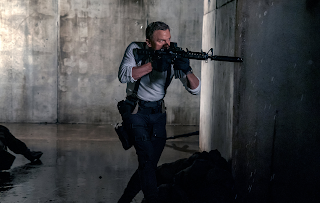
A second viewing is perhaps necessary now that the overwhelming emotion and conflict has died down, but this was a Bond film worthy of the wait. Daniel Craig is simply excellent every second he is on-screen and whilst his chemistry with Lea Seydoux feels flat, scene stealing turns from Ana de Armas and Ben Wishaw make up for it massively. Included in the mighty 163 minute runtime are loving homages to the underrated On Her Majesty's Secret Service, some cracking locations and a series of showstopper set-pieces in Italy, Norway and a... stairwell? A Bond film of both convention and boldness. 


8. Last Night in Soho

Another treat from Edgar Wright. Thomasin McKenzie continues a northward trajectory as Eloise, a university student who, at night, lives through the shoes of Anya Taylor-Joy's Sandy, a performer from the far more sinister 1960's London. Acting like a reverse Hot Fuzz, whereby the protagonist moves from the village to the troubled city, Last Night in Soho is a technical marvel with sumptuous production design, elegant camera moves and tricksy mirror shots. Diana Rigg goes out with a bang in her final role and the soundtrack will be looped on your Spotify for days. 


7. The Harder They Fall

If the Western genre has one major flaw it is its inherent whitness. Considering over a quarter of cowboys and lawmen were black on the US frontier, it's a cinematic calamity that these numbers are not reflected in the films of the genre. Enter The Harder They Fall, an almost all-black ensemble-starring exercise in sheer style. Director Jeymes Samuel resurrects numerous real life African American figures and thrusts them into a gripping story about two rival gangs looking for revenge. Idris Elba, LaKeith Stanfield and Regina King are mighty, but the final shootout is the film's true weapon. 


6. Sound of Metal 

A worthy awards contender last year, Sound of Metal is essential viewing. Riz Ahmed is often fabulous but this is undeniably his greatest achievment as he plays Reuben, a drummer who loses his hearing and seeks to get it repaired, realising as he does that self-acceptance is more important than striving to be healed. The sound design is staggering in putting the audience into his shoes; one scene with a child on a slide is unforgettable. 


5. Luca

It seems a shame that Disney has put Pixar's latest, the equally terrific Soul and Luca, onto Disney+ for free whilst Disney's own films (such as the boring Raya and the Last Dragon) get theatrical releases and premium rental options. Regardless of this, Luca is like a hot squash to treat a cold- warm, sweet and makes your nose run. Beautiful animation collides with a captivatingly simple story that ensures Luca will be a classic 'when I'm ill I always watch...' film. Silencio Bruno!


4. The Last Duel 

Ridley Scott maybe deluded in blaming millenials on their phones for the box office bomb of this, but he isn't wrong about this film finding an audience in the future and being highly regarded like his Blade Runner. Matt Damon and Ben Affleck reunite for scriptwriting and performing, crafting a handsomely structured modern Rashomon that investigates a sexual assault from a trio of perspectives: Damon's de Carrouges, his wife Marguerite's (excellent Jodie Comer) and Adam Driver's Jacques le Gris. With bursts of hard medieval ultraviolence, Ridley Scott returns to prime form with this MeToo inspired picture. The finale is unrelentingly gripping. 


3. Dune

Frank Herbert's 1965 novel is to science-fiction what The Lord of the Rings is to fantasy- a dense, intricately detailed epic filled with characters and races, customes and cultures. Only a filmmaker as passionate as Denis Villenueve could have adapted the towering work so faithfully to the big screen, opting to only translate roughly the first half of the novel to film. The gonzo cast is spearheaded by the ubiquitous Timothee Chalamet but its the technical aspects that leave you speechless: Greig Fraser's mindblowing cinematography, the sense of scale, Hans Zimmer's score and some fabulously realised vehicles and costumes. 


2. The Mitchells vs The Machines

Perhaps this film might not have even been watched were it not for a five star review from Empire that revealed this was a spiritual, creative sequel to Phil Lord and Chris Miller's insane Spider-man: Into the Spiderverse. Like that 2018 classic, MvM is ludicrously kinetic with its stunning, refreshing animation and genuinely hilarious comedy. This is the funniest film of the year, and it's a shame its meme potential was never realised. The Mitchell family are a joy to watch as their world is upended by Olivia Coleman's snooty AI who unleashes swarms of robots to imprison humanity. Admist all of the action and needle-drops there is a beautiful father-daughter relationship and an immortal message on family tolerance. 


1. The Power of the Dog 

Here is something nobody saw coming: Netflix released two brilliant Westerns this year. Considering that genre is not even listed on the streaming site, it's a serious feat. Jane Campion's critical darling, The Power of the Dog pulls you in hook, line and sinker through its delicious subtleties. Benedict Cumberbatch had had a belter of a year: The Courier, Spider-man, The Mauritanian and, hopefully, his Oscar gambit as Phil Burbank in this 1920s set stunner about two cowboy brothers who find their romantic match in a mother and her son. Kodi Smit-McPhee provides a stellar supporting role as the son, who, in the last few shots, clicks everything together in a surprising but spot-on reveal. If the slowburn is too much for most audiences, as well as the hints for violence that never comes, then its the long shadows of explored masculine fragility that will linger. 


                Awards 2021!

Favourite Male Performance: Benedict Cumberbatch in The Power of the Dog 

Honorable Mentions: Stellan Skarsgaard in Dune, Daniel Craig in No Time to Die, Mads Mikkelson in Another Round, Will Smith in King Richard, Riz Ahmed in Sound of Metal, Willem Dafoe in Spider-man: No Way Home

Favourite Female Performance: Jodie Comer in The Last Duel 

Honourable Mentions: Anya Taylor-Joy in The Last Night at Soho, Rebecca Ferguson in Dune, Ana de Armas in No Time to Die, Emily Blunt in A Quiet Place: Part II, Frances McDormand in Nomadland

Best Director: Denis Villeneuve, Dune 

Best Cinematography: Greig Fraser, Dune

Runner Ups: The Green Knight, Zack Snyder's Justice League, The Power of the Dog

Best Score: Hans Zimmer, Dune

Best Editing: Last Night in Soho 

Favourite Action Scenes:

  • Misty woods- No Time to Die 
  • Godzilla vs Kong Round 2- Godzilla vs Kong 
  • The last duel- The Last Duel 
  • Final shootout- The Harder They Fall
  • Sandworm attack- Dune
  • Furbies- The Mitchells vs The Machines
  • Spider-men vs the Green Goblin- Spider-man: No Way Home
  • Father and son vs Whitespike queen- The Tomorrow War 
  • Superman vs Steppenwolf- Zack Snyder's Justice League
Favourite Non-Action Scenes: 
  • Banjo vs piano- The Power of the Dog 
  • Farewell- Luca
  • The dance- Last Night in Soho

Sunday, 12 December 2021

David Fincher Filmography

The heir to Stanley Kubrick from a directing perspective, David Fincher is best known for his crime and thriller films that have dark and moody atmospheres and the occasional narrative twist. Notorious for his extensive amount of takes and 'control freak' persona, Fincher's film always come across as polished, slickly edited productions dotted with electrifying performances. Let's take a look at his work. 

11. Alien^3 

It is contentious as to whether the third instalment of the Alien franchise should make the list; despite being Fincher's debut it was a butchered, studio-twisted film that the director himself wants nothing to do with. It is Fincher's only truly bad film: the infuriating handling of some of the characters from Aliens at the start sets off a narrative that feels unfulfilling and second-rate compared to the predecessors. Fincher still crafts a film that impresses visually, with a handful of famous shots, but this is one best to forget exists. 

10. The Game 

It is testament to Fincher's quality of output that The Game is his second weakest film. Michael Douglas plays a millionaire who finds himself playing a 'game' that forces him to question what is real, what is dangerous and what isn't. It is a firmly 1990s film, and Douglas is solid in the lead: he doesn't 'lose it' too early so as to stagnate the rest of the film but there is still a seething sense of frustration coming from his performance that really works. Let down by a twist that forces you to forget a lot of what came before, The Game is adequate as a slow burner, but not overly memorable. 

9. The Curious Case of Benjamin Button 

Fincher's only fantasy-romance film, Benjamin Button is ferociously long for a short story adaptation, but the concept of a man who lives his life backards is utilised well. Anchored by a stoic Brad Pitt performance and some helpful visual effects work, Fincher smoothly resurrects the early 20th century with immaculate costumes and sets. Ultimately the picture doesn't have too much to actually say beyond 'old people and babies have similarities' but there is a literary feel to the film that makes for pleasent Sunday afternoon viewing. 

8. Mank 

Fincher's most personal film is his most recent. Adapting his late father's screenplay, the picture charts   Gary Oldman as Herman Mankiewicz, the screenwriter of the legendary Citizen Kane, who tussels for creative control in the Golden Era of Hollywood. For lovers of Kane, Orson Welles, classic films and the era as a whole, this is a gem to behold. Packed with authentic detail, gorgeous monochrome photography and a unique, highly designed sound scape, it is a cornucopia of film Easter eggs. But whilst it is technically impressive, the story and purpose of the film are sketchy. Much like Tarantino's Once Upon a Time in Hollywood, Mank serves as a visual autobiography for its director who struggles to get his vision in modern Hollywood. Fincher must see something of himself in the screenplay, because there is little else to thematically and emotionally attatch to here. 

7. Zodiac 

This may seem like heresy to some to have Zodiac slap-bang in the middle of a Fincher ranking, and it's understandable why this is a highly appreciated film. Drawing on three engaging performances from Robert Downey Jr., Jake Gyllenhaal and Mark Ruffalo, Fincher's childhood obsession with the Zodiac killings is painstakingly animated into celluloid. The killings are exceptionally directed and the screenplay is chock full of details and theories that demand further research. The basement scene is also outstanding too. Where the film suffers is its length. This is the longest 160 minute film going: if you don't look at the time then it can become impatient as it mercilessly continues to include seemingly every important date and detail in the case. It is documentary-esque in approach and perhaps that is the alternative for this story so as to condense the bum-numbing run time.

6. Panic Room 

A moderately underrated thriller. Fincher goes full Hitchcock for this one, following a stylish opening credit scene he sets the cameras up in a rather nice, empty new home in the city and never leaves it for two hours. Jodie Foster and Kristen Stewart are the mother and daughter who have just moved in and find themselves under siege in the house's panic room when Jared Leto and Forest Whitaker break in for some illegal antics. If the set-up feels too basic for a 120 minute picture, then marvel at how Fincher and cinematographers Conrad Hall and Darius Khondji find new and inventive ways to smoothly move the camera around to create a very dynamic experience within the confines of the claustrophobic setting. The payoff does have its ex machina moments, but as a thriller that thrills effectively, it accomplishes exactly what it intends. 

5. The Girl with the Dragon Tattoo 

A worthy English-language remake, this Daniel Craig-starrer has all the murkiness of Denis Villenueve's Prisoners. Boasting astounding work from Daniel Craig, Rooney Mara and Stellan Skarsgaard, Dragon Tattoo is crisply shot and filled with some horrific, unforgettable images. Often unflinching, Fincher directs with utter calmness whilst the Oscar-winning editing is truly flawless. Having made this so swiftly after The Social Network is a feat unto itself.  


4. The Social Network

A critic's favourite film, this is frequently cited as one of the greatest films of the 2010s. It's easy to see why: Fincher is fully in control of the subject matter as he chronicles the emergence of Facebook and the appalling behaviour of the insufferable Mark Zuckerberg. Aaron Sorkin's high energy script absorbs from the first scene, and the irritating Jesse Eisenberg is annoyingly good casting as the equally irritating tech giant. The score is mesmerising and Andrew Garfield knocks it out of the park too. But please Fincher, what did you do with the other Armie Hammer twin?


3. Gone Girl 

A total surprise of a film considering how popular the novel was among mums (think Fifty Shades of Grey and Girl on the Train). Fincher is at home making elusive crime films and Gone Girl summons a shedload of the director's creative juices. Captivating through Rosamund Pike's tour de force performance, the mysteries and relationships are intoxicating dramatically. When it is violent it is very violent, but it earns the right to be due to the slow pacing and unease. 


2. Fight Club 

It's easy to hate on Fight Club: like Joker, American Psycho and The Wolf of Wall Street. it belongs firmly in the film-bro camp of idolised cinematic texts. Fight Club is one of two Fincher films I have seen twice and if the first time underwhelmed, the second time was a blast. The brutal fight scenes, charismatic Brad Pitt performance and its position on consumerism are fascinating, whilst the tackling of masclinity is divisive and incomplete. If it suffers from all of its narration, it makes up for it with wry humour and a total ridiculousness that makes it a terrifically enjoyable ride. 


1. Se7en 

David Fincher's best film, Se7en is one of the greatest films of the 1990s. Brad Pitt and Morgan Freeman investigating murders inspired by the Seven Deadly Sins is a tantalising prospect on its own, but the rain lashed city, unnerving third-act and haunting final lines seal this in the memory. The devil is in the details and Fincher packs the film with them: the opening credits, the macabre images and the heavy foreshadowing are joyful to unpack on second viewing. By the time the three main characters get in a car together to an undisclosed location, it's hard to blink.